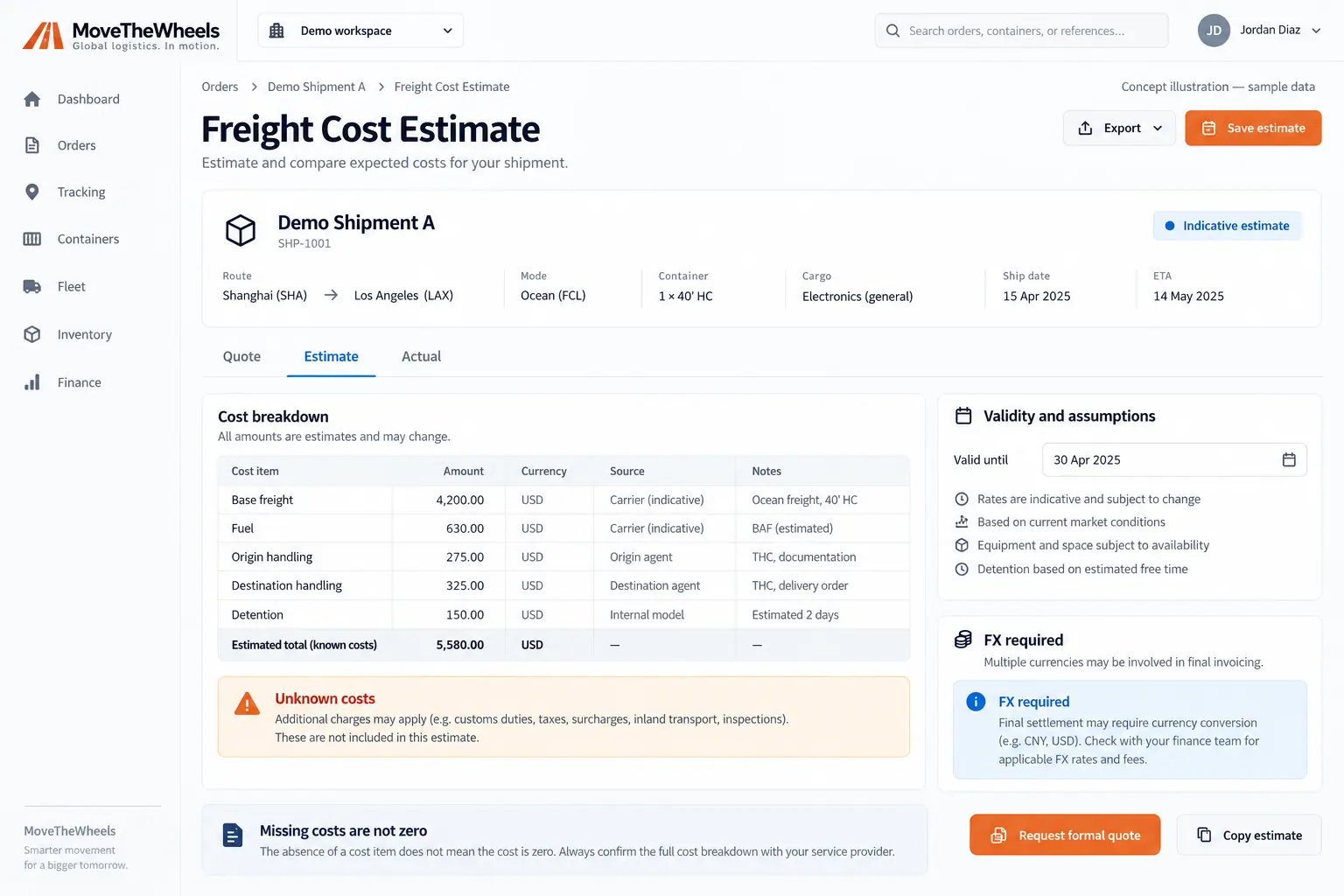
A freight cost analyst is asked why an attractive headline rate did not explain the eventual cost of moving a shipment. The useful first question is which charges and assumptions the source actually covers, rather than whether every blank can be filled with zero.
The Freight Cost Estimate Review concept illustrates a cost table with amounts, currencies, sources and notes. Known costs remain separate from unknown charges, validity assumptions and currency-conversion needs. Its sample shipment and cost figures describe an indicative estimate, not a carrier commitment or customs assessment.
A second illustration explores optional commercial context. The expanded example keeps origin, destination, carrier, service, cargo, weight, volume and equipment Unknown, with an editable explanation that each was not recorded for this cost version. The panel is off by default. Separate cards invite explicit leg review and show fictional source evidence, without treating a document link as verified commercial authority.
A third illustration shows manual invoice comparison against one exact recorded estimate version. The analyst explicitly maps reported invoice rows to estimate lines. A fictional base-freight difference remains visible, a sourced zero stays zero, and an unmatched surcharge keeps the comparison incomplete. The design does not automatically pair descriptions or turn missing facts into a zero difference.
See the Freight Cost Estimate Review concept for all three illustrations. The design is intended to help a person review recorded scope, uncertainty and reported invoice differences. All data is fictional. Recording context or a comparison does not accept a quote, book freight, confirm capacity, approve an invoice or settle payment.
Ready to make this your story?